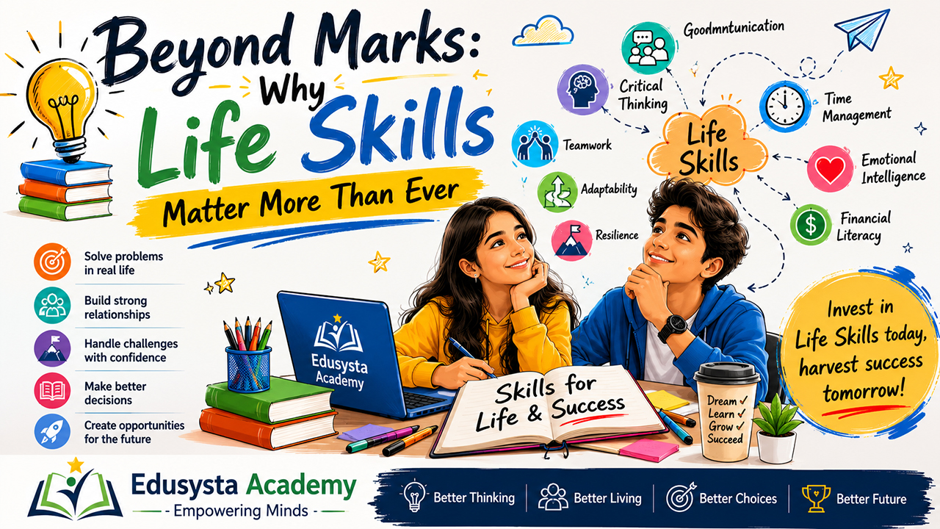
Beyond Marks: Why Life Skills Matter More Than Ever
Imagine two students graduating with identical grades. A few years later, one is confidently leading a team, solving problems, adapting to change, and building meaningful relationships, while the other struggles with communication, decision-making, and handling setbacks. What made the difference? It wasn’t their marks—it was their life skills.
For decades, academic success has been measured by report cards, test scores, and examination results. While these are important, today’s rapidly changing world demands much more. Employers, universities, and society are looking for individuals who can think critically, collaborate effectively, communicate confidently, and adapt to new challenges. In other words, success is no longer defined by what you know alone, but by how well you apply that knowledge in real life.
Here are some essential life skills every student should develop.
Communication skills
The ability to express ideas clearly is one of the most valuable skills anyone can possess. Whether presenting a project, participating in a discussion, or attending a job interview, effective communication builds confidence and creates opportunities.
A simple way to improve is by speaking regularly in class, participating in debates, or explaining concepts to friends and family.
Critical thinking and problem solving
Life rarely provides textbook answers. Students must learn to analyse situations, evaluate different perspectives, and make informed decisions.
Instead of immediately searching online for solutions, challenge yourself to identify the problem, consider alternatives, and justify your chosen solution. This habit develops independent thinking.
Time management
Every student has the same 24 hours each day. The difference lies in how those hours are used. Prioritising important tasks, avoiding procrastination, and planning ahead reduce stress and improve productivity.
Using a planner, maintaining a study schedule, or following the Pomodoro Technique can help students make better use of their time.
Emotional intelligence
Understanding and managing emotions is just as important as academic intelligence. Students with strong emotional intelligence build healthier relationships, work well in teams, and remain calm during challenging situations.
Practising empathy, listening actively, and reflecting before reacting are small habits that make a significant difference.
Adaptability
Technology, careers, and industries are evolving faster than ever before. Students who embrace change, learn continuously, and remain open to new ideas will be better prepared for the future.
Trying new experiences, learning digital tools, or taking on unfamiliar challenges helps develop adaptability.
Financial literacy
Many students graduate without understanding budgeting, saving, investing, or managing money responsibly. Yet financial decisions affect almost every stage of life.
Learning basic concepts such as budgeting monthly expenses, distinguishing between needs and wants, and understanding the power of compound interest creates lifelong benefits.
Collaboration and teamwork
Modern workplaces value collaboration over competition. Whether in school projects or professional environments, success often depends on working effectively with others.
Respecting different opinions, sharing responsibilities, and resolving disagreements constructively strengthen teamwork skills.
Resilience
Failure is not the opposite of success—it is often the pathway to success. Every setback offers an opportunity to learn, improve, and become stronger.
Students should view mistakes as valuable feedback rather than permanent failures. Every challenge builds confidence for the next one.
Developing life skills doesn’t require a separate subject in school. They grow through everyday experiences—working on group projects, participating in extracurricular activities, volunteering, taking leadership roles, solving real-world problems, and reflecting on personal experiences. Parents, teachers, and schools all play an important role in creating opportunities for students to practise these skills regularly.
Academic knowledge opens doors, but life skills determine how far you can go once those doors are open. Marks may help you earn admission into a university or secure your first interview, but communication, resilience, adaptability, integrity, and leadership are what sustain long-term success. In a world driven by innovation and constant change, the greatest investment students can make is not only in their education but also in their personal growth.
Remember, examinations measure what you know at a particular moment in time. Life, however, measures how you think, how you treat others, how you overcome challenges, and how you continue learning every single day. The true purpose of education is not simply to prepare students for exams—it is to prepare them for life.