10 Classroom Strategies That Instantly Increase Student Engagement
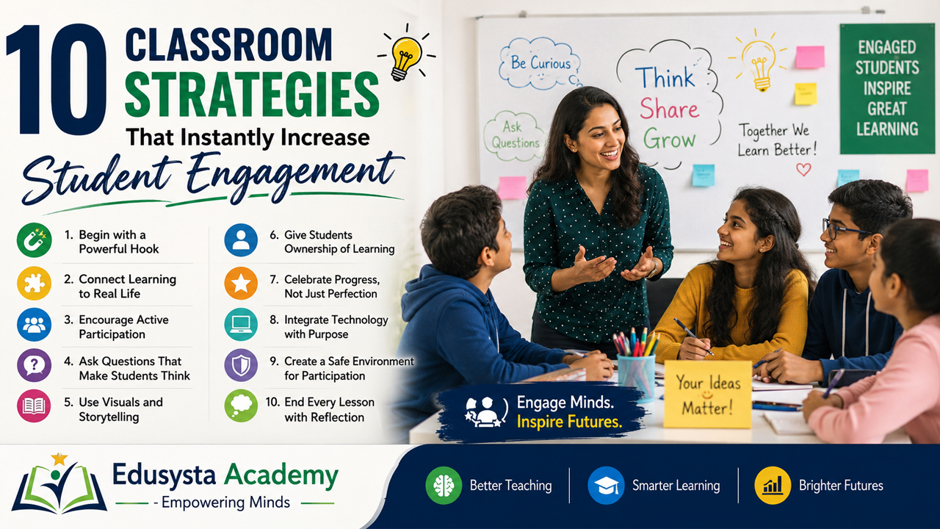
Have you ever finished teaching an excellent lesson only to find half the class staring out the window, checking the clock, or quietly drifting into their own thoughts? Every teacher has experienced this moment. The challenge isn’t simply delivering content—it’s capturing attention, sparking curiosity, and creating an environment where students genuinely want to participate. Student engagement is the heartbeat of effective teaching. When learners are actively involved, they understand concepts more deeply, retain information longer, and develop the confidence to think independently.
One: Begin with a powerful hook
Start every lesson with something unexpected—a thought-provoking question, an intriguing fact, a short video, or a real-life scenario. For example, instead of introducing supply and demand with definitions, ask, “Why do concert tickets become so expensive just before the event?” Curiosity naturally leads to learning.
Two: Connect learning to real life
Students engage more when they see the relevance of what they are learning. Relate lessons to current events, careers, personal experiences, or everyday situations. When students understand the “why” behind a topic, they become more invested in exploring it.
Three: Encourage Active participation
Replace long lectures with interactive activities. Think-pair-share discussions, quick polls, brainstorming sessions, and small group tasks keep students mentally involved. Even a two-minute discussion break can significantly improve attention and understanding.
Four: Ask questions that make students think
Move beyond questions that test memory. Ask students to compare, justify, predict, or evaluate. Questions such as, “What would happen if…?” or “Which solution would you recommend and why?” encourage deeper thinking and meaningful classroom conversations.
Five: Use visuals and storytelling
People remember stories far better than isolated facts. Use diagrams, infographics, case studies, illustrations, or personal experiences to explain concepts. A memorable story often stays with students long after the lesson ends.
Six: Give students ownership of learning
Whenever possible, offer choices. Allow students to select a project topic, presentation format, or research question. Giving learners some control over their learning increases motivation and responsibility.
Seven: Celebrate progress, not just perfection
Recognize effort, improvement, creativity, and persistence. A simple comment like, “I like how you explained your reasoning,” reinforces positive learning behaviours. Celebrating small wins builds confidence and encourages students to participate more actively.
Eight: Integrate technology with purpose
Digital tools can transform classroom interaction when used thoughtfully. Online quizzes, collaborative whiteboards, simulations, educational games, and AI-powered learning tools can make lessons more dynamic. The focus, however, should always remain on learning—not technology itself.
Nine: Create a safe environment for participation
Students are more willing to ask questions and share ideas when they know mistakes are viewed as opportunities to learn. Encourage respectful discussions, appreciate different viewpoints, and respond positively to incorrect answers by guiding students toward better understanding.
Ten: End every lesson with reflection
Before students leave, ask them to write one key takeaway, one question they still have, or one idea they found interesting. This simple reflection reinforces learning, provides valuable feedback, and helps students become more aware of their own progress.
Student engagement does not require expensive technology, elaborate lesson plans, or dramatic classroom transformations. Often, it is the small, intentional actions—a compelling opening, an engaging discussion, a relevant example, or genuine encouragement—that make the greatest difference. Great teachers understand that learning is not something done to students; it is something created with them.
As educators, our greatest success is not measured by how much we teach but by how much our students discover, question, and remember. Every lesson is an opportunity to ignite curiosity, inspire confidence, and shape a lifelong love of learning. When students are engaged, education moves beyond textbooks and examinations—it becomes an experience that empowers them to think, grow, and succeed.